
Fairview Heights Personal Injury Lawyer
Fairview Heights sees more than its share of injury claims tied to retail lots, car dealership test drives, and the traffic feeding St. Clair Square and the IL-159 corridor.
Insurance adjusters treat a mall parking lot fall differently than a residential one, and not in the injured person’s favor. Large retail landlords carry sophisticated claims departments built specifically to minimize payouts on the exact kind of fall or fender-bender that happens dozens of times a week across a property like St. Clair Square.
Our personal injury lawyers at Hipskind & McAninch review these claims free of charge. Knowing that going in changes how a Fairview Heights claim should be handled from the first call.
Call 618-641-9189, available 24/7.

What Our Insider Perspective at Hipskind & McAninch Adds to Fairview Heights Claims
Brady McAninch and John Hipskind spent years defending large companies and their insurers before founding this firm, and Fairview Heights claims often involve exactly the kind of defendant they used to represent: national retail chains, auto dealership groups, and the commercial insurers behind them.
That experience shapes how evidence gets requested and how an early lowball offer gets challenged.
Our firm has recovered over $50,000,000 for injured clients, holds 500+ five-star Google reviews, and both founding attorneys carry Super Lawyers Rising Stars recognition and perfect Avvo ratings. Free consultations are available by phone, video, or in person, 24/7.
What Kinds of Injury Cases Come Out of Fairview Heights?
Fairview Heights’ identity as a regional retail and auto-sales hub along IL-159 and US-50 shapes a specific mix of cases:
- Slip and fall incidents at St. Clair Square and surrounding retail lots, especially during winter months when large parking areas are harder to keep fully treated.
- Car accidents in Fairview Heights along the IL-159 and US-50 corridors, where heavy retail and commuter traffic converge at a handful of major intersections.
- Test-drive and dealership-lot incidents, tied to the city’s concentration of auto dealerships along the Auto Mall corridor.
- Rideshare and delivery-related collisions near restaurants and big-box stores, following the same retail traffic pattern that drives the city’s commercial identity.
Each case type points toward a different insurance policy and a different evidence trail, from a store’s inspection log to a dealership’s test-drive waiver.
What Should You Do After a Fall at a Fairview Heights Store or Mall?
Report the fall to store management immediately and ask for a written incident report, since large retailers document these events specifically to protect their own position later. A few additional steps protect a claim early:
- Photograph the hazard itself, not just your injury, before cleanup crews or maintenance staff remove the evidence.
- Ask whether the location has surveillance coverage and request preservation of the footage in writing, since retail systems frequently overwrite footage within days.
- Seek medical evaluation the same day, even for injuries that seem minor at first, since documentation timing affects how an insurer values the claim later.
What If You Were Hurt During a Test Drive at a Fairview Heights Dealership?
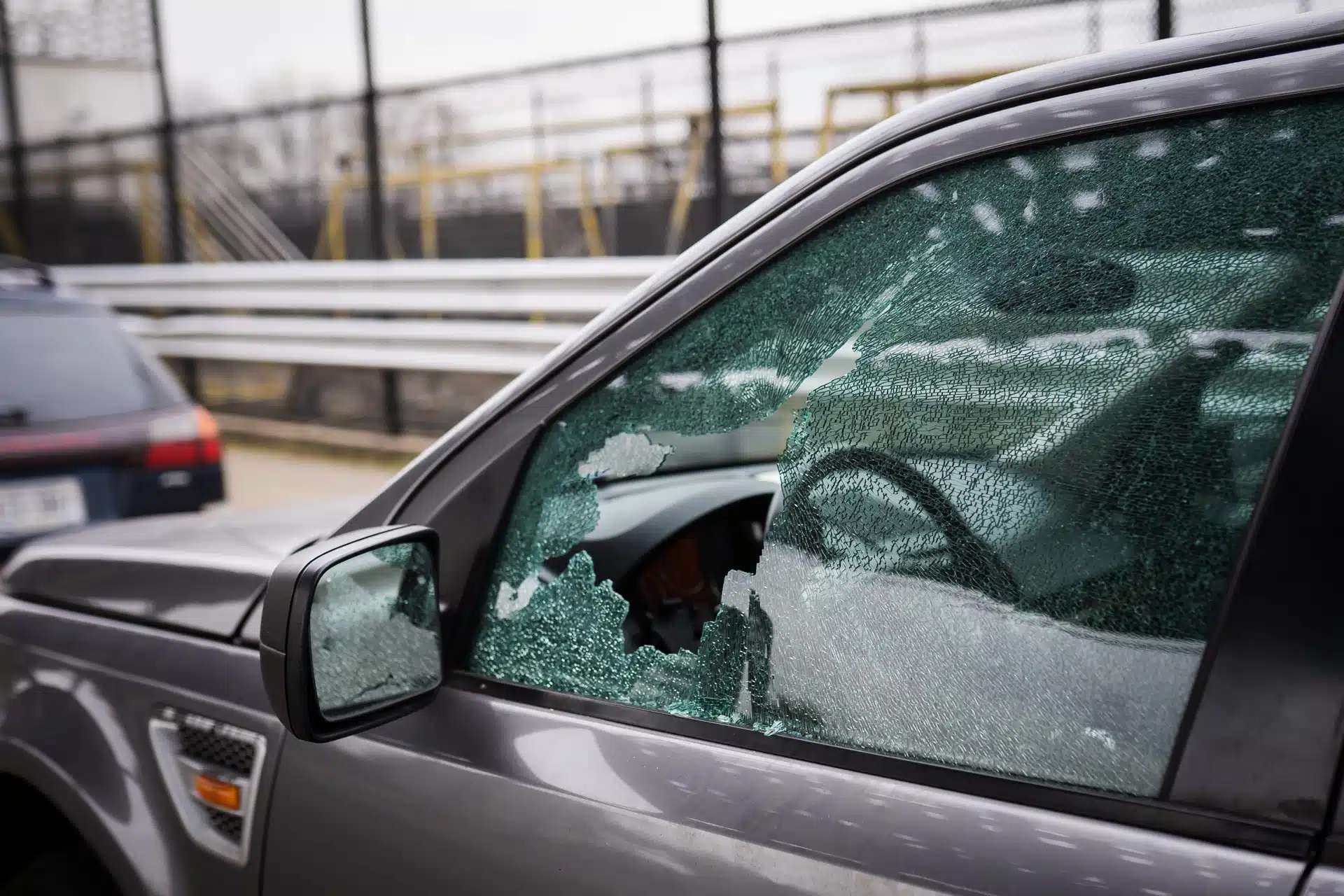
A test-drive collision falls under the dealership’s commercial auto insurance policy rather than a personal policy, since the dealership owns the vehicle and typically carries coverage specifically for demonstration and test-drive use.
Dealerships can ask customers to sign a waiver before a test drive, and that waiver doesn’t eliminate liability for the dealership’s negligence or a vehicle defect.
A collision during a test drive also raises a question of who was actually driving at the time. If a salesperson was behind the wheel, the claim proceeds much like any other vehicle collision, but if the customer was driving with a salesperson in the passenger seat, the dealership’s supervision and any instructions given before the drive may become relevant to how fault gets assigned.
How Long Do You Have to File a Claim in Fairview Heights?
Illinois gives injured people two years from the date of the incident to file a personal injury lawsuit under 735 ILCS 5/13-202, and Fairview Heights claims fall under the same deadline as the rest of St. Clair County, where cases are heard at the St. Clair County Courthouse in Belleville.
Claims against a government-owned property or a municipal vehicle may carry a shorter notice window, which is worth confirming early.
Can You Still Recover If You Were Partly at Fault?
Yes, under Illinois’s modified comparative negligence rule, 735 ILCS 5/2-1116, a claimant found to be 50 percent or less at fault still recovers damages, reduced by that percentage, while a claimant found more than half at fault recovers nothing.
Retail and dealership insurers frequently argue a customer was not paying attention, since shifting even a small percentage of fault reduces what the insurer ultimately pays.
What Determines How Much a Fairview Heights Injury Claim Is Worth?

The value of a Fairview Heights injury claim depends on injury severity, the strength of the liability evidence, and which insurance policy applies.
A claim against a national retail chain’s commercial policy behaves differently than one against a single at-fault driver’s personal policy, both in available coverage and in how it gets defended.
- Medical treatment required, including emergency care, surgery if needed, and any future treatment a doctor anticipates.
- Lost wages and reduced earning capacity, particularly relevant for retail and service workers common in this commercial corridor.
- Strength of the liability evidence, such as a store’s inspection log, a dealership’s test-drive waiver, or a police report.
- Comparative fault findings, since Illinois’s rule reduces an award by whatever percentage of fault gets assigned to the claimant.
A severe injury with strong liability evidence generally settles higher than a similar injury where fault is disputed, which is why documenting the hazard and the response to it matters as much as the medical treatment itself.
Fairview Heights Case Type Comparison
Not every Fairview Heights accident points to the same defendant or the same insurance policy, and knowing the difference early changes how quickly a claim moves.
The table below breaks down the four most common case types the firm sees in this part of St. Clair County, along with who is typically responsible, which insurance applies, and the first step worth taking in each situation.
| Case Type | Usual Defendant | Insurance Involved | Key Early Step |
|---|---|---|---|
| Mall or retail lot fall | Property owner or store operator | Commercial general liability | Request an incident report and surveillance preservation |
| IL-159/US-50 car accident | At-fault driver | Personal or commercial auto policy | Secure a police report and vehicle data |
| Dealership test-drive incident | Dealership | Dealership commercial auto policy | Identify the vehicle’s insurance and any defect |
| Rideshare/delivery collision | Driver and platform company | Commercial rideshare or delivery policy | Determine the driver’s active-trip status at the time of the crash |
FAQ for Personal Injury Lawyer Fairview Heights
Maybe not while the storm is actively in progress, since Illinois does not require a property to keep every surface ice-free the moment snow starts falling. A fall well after the storm passed, with no salt or plowing attempted, is a different situation.
This is one of the most common arguments retail insurers raise, and Illinois’s comparative fault rule means it may reduce a recovery without eliminating it, unless a claimant is found more than half at fault.
Yes, though reporting immediately makes the claim considerably easier to prove, since a delayed report gives the store room to argue the fall happened somewhere else or was less serious than claimed.
Most premises cases resolve within six months to two years, depending on injury severity and whether the retailer’s insurer disputes liability outright.
Not always, since many parking lot incidents are handled through store incident reports rather than police reports, but calling police for any accident involving injury is still a good practice.
The business’s commercial insurance may apply in addition to the driver’s personal policy, particularly if the driver was actively working at the time of the crash.
Yes, if the employee was acting within the scope of their job, such as during a test drive or a vehicle delivery, the dealership’s insurance generally covers the claim.
It may, since a runaway cart injury can point toward either the store’s cart-corral maintenance or another shopper’s negligence, and identifying which one applies affects who the claim is filed against.
The underlying Illinois law is the same either way, though a national chain typically has a dedicated claims department and a faster, more practiced response than a smaller local business would.
This can point toward the dealership’s parking and vehicle-securing procedures, particularly if a vehicle was left running, unattended, or improperly parked on a slope, and it is worth having a free consultation to sort out where responsibility falls.
Nothing upfront. Our firm works on a 33 percent contingency fee, meaning payment comes only from money recovered, and the initial consultation is always free.
Yes, our firm handles cases throughout St. Clair County, so a crash near the interstate on-ramp is handled no differently than one inside city limits.
Yes, Brady McAninch and John Hipskind spent years defending large companies and their insurers before founding this firm, and that experience applies directly to the national retail and auto-dealership defendants common in Fairview Heights claims.
Our firm is available 24/7 by phone, and free consultations are scheduled promptly by phone, video, or in person.
Start Your Fairview Heights Case With a Personal Injury Lawyer
Retail and dealership insurers move fast to protect their position after an incident on their property. Call Hipskind & McAninch at 618-641-9189, available 24/7, for a free consultation about what happened and what comes next. Big firm result, small firm care. Every case, every time.