
A car accident lawyer in Jersey County, Illinois, helps residents and visitors recover compensation after crashes on local roads and the Great River Road scenic byway. Seasonal flooding along the Mississippi and Illinois Rivers regularly closes stretches of Illinois Route 100 through Grafton, creating detour-related crash risks specific to this county.
Illinois Route 100 through Grafton floods often enough that the Illinois Department of Transportation maintains standing detour routes for it, rerouting traffic onto Illinois 3, 109, and 16 whenever the Mississippi rises.
That detour pattern, combined with the scenic byway’s bluff curves and heavy seasonal tourist traffic, creates car accident cases that don’t look like a typical Metro East crash.
Hipskind & McAninch represents people hurt in accidents across Jersey County, including Jerseyville and Grafton. Call 618-641-9189 for a free case review.
Why This Firm Takes on Cases Insurance Companies Try to Blame on the Road Itself

John Hipskind, Car Accident Attorney
When a crash happens during a flood detour or on an unfamiliar scenic route, insurance companies sometimes push the idea that road conditions, not driver conduct, caused the wreck.
Brady McAninch and John Hipskind spent years defending large companies and insurers before representing injured clients, and that background includes recognizing when weather or road conditions get used to shift blame away from a negligent driver.
The firm’s baseline contingency fee is 33 percent, consistent across every county it serves, and clients reach their attorney directly rather than through a general office line.
A flood detour might explain unfamiliar traffic patterns, but it rarely excuses a driver following too closely or misjudging a curve they should have slowed down for.
Why Do Seasonal Flooding and Detours Increase Crash Risk on the Great River Road?
Flooding along the Mississippi and Illinois Rivers regularly closes Illinois Route 100 through Grafton, forcing traffic onto unfamiliar detour roads that weren’t built for the added volume. Drivers rerouted onto Illinois 3, 109, or 16 during a closure often don’t know the curves, intersections, or speed changes on those roads the way they know the route they normally take.
A few conditions raise crash risk during flood season specifically:
-
- Detour routes carrying more traffic than they’re designed for, especially at rural intersections.
-
- Drivers unfamiliar with detour roads misjudging curves or stop signs they don’t expect.
-
- Standing water or debris left behind after a river crests, even after a road technically reopens.
-
- Reduced visibility from fog is common along the river bottoms during flood season.
None of these conditions removes a driver’s duty to adjust for what’s actually on the road in front of them. A flood explains why traffic got rerouted, but it doesn’t explain why a driver followed too closely or took a blind curve at normal speed.
Who Is Liable for a Crash Tied to a Missing Detour Sign or Closure Notice?
You may have a claim against a government entity if inadequate signage or a failure to post a required closure notice contributed to your crash, though these claims carry different rules than a standard driver negligence case. Illinois law limits how and when claims against government entities can proceed under the Local Governmental and Governmental Employees Tort Immunity Act, 745 ILCS 10.
A few questions matter in this type of claim:
-
- Was a detour or closure sign missing, obscured, or knocked down before your crash?
-
- Did the government entity responsible for that road know about the missing signage beforehand?
-
- How much time passed between when the hazard should have been reported and when your crash happened?
Claims against a government entity in Illinois often require formal notice within a short window, sometimes as little as one year, compared to the standard two-year deadline for a private driver. Missing that shorter window can end a claim before it starts, so time matters more here than in a typical car accident case.
What About Motorcycle and Bicycle Crashes on the Scenic Byway?
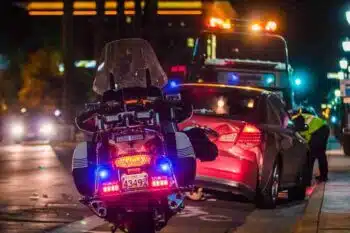
Motorcycle and bicycle traffic increases significantly along the Great River Road during warmer months, since the route is a designated National Scenic Byway that draws riders from across the region. That seasonal traffic mix raises specific visibility and following-distance concerns that a standard car accident claim doesn’t usually involve.
The Sam Vadalabene bike trail runs alongside sections of the byway between Alton and Grafton, putting cyclists near vehicle traffic on curving bluff roads with limited shoulder space. A driver unfamiliar with the route who misjudges a blind curve poses a real risk to a motorcyclist or cyclist sharing that same stretch of road.
Where Do Jersey County Injury Cases Get Filed?
Jersey County personal injury cases are filed through the Jersey County Courthouse in Jerseyville, part of the Seventh Judicial Circuit of Illinois. That circuit differs from the Third Judicial Circuit that handles Madison and Bond County cases, which matters for anyone whose crash happened near a county line.
| Detour Route | Affected Highway | Typical Trigger |
|---|---|---|
| IL 3, IL 109, IL 16 | IL 100 through Grafton | Mississippi River flood stage |
| Local county roads | Grafton Ferry / Golden Eagle Ferry crossings | High water, ferry suspension |
| IL 3 | IL 100 near Alton to Grafton | Bluff-area high water |
A case built around a Jersey County crash benefits from knowing which circuit and courthouse it belongs to from the start, since procedural rules and filing requirements aren’t identical from one Illinois circuit to the next.
How Long Do You Have to File a Car Accident Claim in Illinois?
Illinois gives most car accident victims two years from the date of the crash to file a lawsuit against a private driver, under 735 ILCS 5/13-202. Illinois also follows a modified comparative fault rule, meaning a driver found 50 percent or less at fault may still recover damages, reduced by that percentage.
That two-year window runs independently of the shorter notice period that may apply to a government entity claim tied to a detour or signage failure. Knowing which deadline applies to which party in your case protects your right to pursue both.
What Should You Do After a Crash Along the Great River Road?
Once you’re home and receiving care, a few steps protect both your health and your claim. This guidance covers what happens after the scene, not the moments right after impact.
-
- Photograph any detour, closure, or warning signage near the crash site, including whether it was present or missing.
-
- See a doctor promptly even if injuries seem minor, since a hard impact on a curving bluff road can cause injuries that surface later.
-
- Note whether you were on a marked detour route at the time of the crash and why.
-
- Keep a written record of medical visits and any symptoms limiting daily activity.
-
- Request any available IDOT closure records for the date of your crash.
Flood-related road records don’t stay available indefinitely, and neither does a clear memory of exactly which detour signs were posted that day. Gathering this information early protects a claim that might otherwise come down to conflicting accounts.
What Compensation Can I Claim?
Compensation in a Jersey County car accident claim covers medical costs, lost income, and property damage, with the value depending on how the crash happened and who is found responsible. A claim involving a government entity may also require different documentation than a claim against a private driver alone.
-
- Medical expenses, including emergency treatment and any care your doctor expects you’ll need going forward.
-
- Lost wages from missed work, along with reduced earning capacity for more serious injuries.
-
- Vehicle repair or replacement costs.
-
- Pain and physical limitation connected directly to the injury.
A claim that involves both a negligent driver and a government entity’s signage failure sometimes recovers from more than one source, though each party’s share depends on how the crash is investigated. Sorting that out early affects how much of the full picture gets captured before evidence fades.
FAQ for Car Accident Lawyer Jersey County
Yes, you may still file a claim, since being on an unfamiliar detour route doesn’t remove another driver’s duty to drive safely. The detour itself becomes relevant only if missing or inadequate signage contributed to the crash.
Yes, it may affect which court has jurisdiction over your case, since Jersey County falls under the Seventh Judicial Circuit while neighboring counties may fall under a different circuit. An attorney can confirm where your specific case belongs.
You may file a claim against the driver responsible, and Illinois law treats motorcyclists and cyclists as having the same right to the road as other vehicles. Visibility and following-distance factors are often central to these claims.
Nothing upfront, regardless of whether your claim involves a private driver, a government entity, or both. Hipskind & McAninch works on contingency, with a baseline fee of 33 percent that may vary by case.
Maybe, you may need a lawyer if the closure or detour wasn’t properly marked, or if another driver’s negligence caused the crash regardless of the detour. A free case review can clarify which factors apply to your situation.
Yes, you may still recover compensation in Illinois as long as you were not more than 50 percent at fault. Your recovery is reduced by your percentage of fault rather than eliminated.
It depends on the circumstances, since a ferry-related incident may involve maritime law questions in addition to standard Illinois injury law. An attorney can determine which legal framework applies to a specific ferry crossing incident.
Yes, Jersey County cases are filed at the Jersey County Courthouse in Jerseyville, the county’s only courthouse and seat of the Seventh Judicial Circuit for this county.
Not necessarily. Case length depends more on injury severity, fault disputes, and whether a government entity is involved than on the county’s size or tourism traffic.

Brady McAninch, Car Accident Attorney
Get Ahead of the Detour Question Before the Insurance Company Frames It
An insurance adjuster who hears “flood detour” often tries to make the road itself the story, shifting attention away from what the other driver actually did.
Hipskind & McAninch separates what the weather explains from what a driver is still responsible for, whether the crash happened on Route 100, a detour road, or near a Jersey County ferry crossing. Call 618-641-9189 to talk through what happened.