
What Insurance Companies Don’t Want Truck Accident Victims to Know
-
- Attorneys who once worked the defense side understand how trucking insurers build a claim, and that inside knowledge can be turned toward injured people.
-
- Trucking companies and their insurers often start building a defense within hours of a collision, sometimes before the injured person has left the emergency room.
-
- Pertinent evidence, including black box data and driver logs, is often controlled by the trucking company and may be lost or overwritten if it is not preserved quickly.
-
- A fast settlement offer is usually designed to close the file before anyone knows the true cost of the injury.
-
- Recorded statements and so-called independent medical exams are tools built to lower the payout, not neutral fact-finding.
-
- Illinois law hands injured people real leverage, including a path to recover extra money when an insurer’s delay or denial becomes vexatious.
The Insurance Company’s Clock Starts at the Crash Site
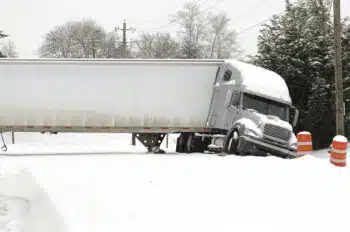 We know this next part cold, because we once made these calls from the other side. Many national carriers keep a rapid-response team on standby, and that team can have investigators and lawyers at the scene of a wreck within hours. Their job is simple: gather every fact that helps the company and lock down anything that might hurt it.
In the Metro East, where freight pours through on Interstate 64, Interstate 255, and the routes feeding the river crossings, that response can be swift. By then, the insurer may already hold photos, measurements, and the driver’s written account.
We know this next part cold, because we once made these calls from the other side. Many national carriers keep a rapid-response team on standby, and that team can have investigators and lawyers at the scene of a wreck within hours. Their job is simple: gather every fact that helps the company and lock down anything that might hurt it.
In the Metro East, where freight pours through on Interstate 64, Interstate 255, and the routes feeding the river crossings, that response can be swift. By then, the insurer may already hold photos, measurements, and the driver’s written account.
How Do Trucking Companies Fight Claims From Day One?
They fight by controlling the evidence, which is how trucking companies fight claims long before you file anything. Because the truck, its data, and the driver all belong to the company, the insurer often holds the very proof that would show what really happened. Modern trucks record a remarkable amount of information. Specifically, a driver’s hours behind the wheel are logged under 49 CFR 395.8, which sets the rules for the record of duty status that shows when a driver was on duty, driving, or resting. Compare those logs against fuel receipts and location data, and a story of an overworked, drowsy driver can come into focus. The electronic proof usually falls into a few buckets, and each one carries weight:-
- Event data recorder readings: The truck’s black box can capture speed, braking, throttle, and steering in the seconds before impact, which is hard for anyone to argue with.
-
- Hours-of-service logs: These records reveal whether the driver blew past federal limits or skipped required rest, a common thread in fatigue crashes.
-
- Maintenance and inspection files: Skipped brake repairs or ignored fault codes can shift blame from the driver to the company that put the truck on the road.
-
- Dispatch and messaging records: Emails and texts between the driver and the company can expose pressure to run unrealistic schedules.
Why Is the First Settlement Offer So Fast, and Should You Take It?
A fast offer is a business decision, and it was one we used to make: close the file before the injured person understands what the case is worth. The primary reason the check comes so quickly is that the insurer wants your signature before the full picture of your injuries and their real exposure comes into view.I spent the early part of my career defending these claims, so I know the first offer is almost never the real ceiling. When the number comes in fast, it usually means the company is hoping you sign before anyone finds the coverage that actually applies. John HipskindFor example, John once handled a head-on collision case where only $100,000 in coverage looked available. Digging deeper, our team found the at-fault driver had been making a delivery for a local newspaper, which opened an additional $2 million in commercial coverage and turned a small claim into a $2.1 million recovery. Results may vary. Prior case outcomes do not guarantee similar results. Once you accept and sign a release, the claim is closed for good, even if your injuries turn out to be far more serious than they first seemed. Illinois actually names this tactic. Under 215 ILCS 5/154.6, it is an improper claims practice for a company to push policyholders into lawsuits by offering far less than what a claim is truly worth. That is one of the most common St. Louis truck accident settlement lowball tactics at work, and it is exactly why a rushed check is worth a careful second look. Find out what your case may be worth before you sign anything.
What Should You Say to an Insurance Adjuster After a Truck Accident?
The honest answer to what to say to an insurance adjuster after a truck accident is to say as little as possible, and never on a recording. From the defense perspective, recorded statements are often one of the most effective tools available to an insurance company because they can be used later to challenge or reduce a claim. Setting a polite limit on those conversations is the better approach. Adjusters are trained to ask questions that appear routine but may later be interpreted against you. Even a casual response such as, “I’m doing fine,” can be cited as evidence that your injuries were not serious. When an adjuster reaches out, keep it short and give only the basics:-
- Your name and contact information
-
- The date and general location of the wreck
-
- The name of your own insurance company
-
- That you will follow up in writing once you have counsel
The “Independent” Medical Exam Is Rarely Independent
 At some point, the insurer may send you to a doctor it calls independent, and that label belongs in scare quotes. We recognize how this works from the inside, because arranging these exams was once part of the defense job.
The company chooses the physician, pays the physician, and sends repeat business to the physician, so the report usually downplays what you are going through. The exam itself often runs only a few minutes, yet the report can carry real weight against you.
The setup usually tilts in a few predictable ways, each with a counter:
At some point, the insurer may send you to a doctor it calls independent, and that label belongs in scare quotes. We recognize how this works from the inside, because arranging these exams was once part of the defense job.
The company chooses the physician, pays the physician, and sends repeat business to the physician, so the report usually downplays what you are going through. The exam itself often runs only a few minutes, yet the report can carry real weight against you.
The setup usually tilts in a few predictable ways, each with a counter:
-
- The rushed once-over: The doctor may spend five minutes with you, then write pages implying your injuries are minor. Get your own treating physician’s detailed records on file first, giving a fuller picture to weigh against the quick exam.
-
- The leading questions: You might be asked things designed to minimize your pain. Answer honestly and briefly, describe your worst days along with your good ones, and do not play down how you feel.
-
- The quiet surveillance: Some insurers pair the exam with video of you doing everyday tasks. Live your life within your restrictions, because a clip of you carrying groceries can be spun into proof that you are fine.
What Counts as Insurance Bad Faith in an Illinois Truck Accident Claim?
Bad faith is when an insurer treats you unreasonably, and Illinois gives you a way to make it cost them. If a company drags out a valid claim, denies it without a real basis, or lowballs to force a fight, the law provides a remedy. Under 215 ILCS 5/155, when a court finds an insurer’s delay or denial was vexatious and unreasonable, it can order the company to pay your legal fees, court costs, and an extra penalty on top of what you were owed. That leverage changes the tone of a negotiation. An adjuster who knows a judge could tack fees and a penalty onto the bill has a strong reason to deal with you honestly. Put simply, insurance bad faith truck accident Illinois law is not just a complaint; it is a tool our attorneys can put to work for you.How Our Truck Accident Team Counters the Insurer’s Playbook
The best answer to a well-drilled insurance strategy is a team that once ran the same plays. At Hipskind & McAninch, LLC, name partner John Hipskind draws on a background in private-sector defense, and founding partner Brady McAninch brings a deep understanding of corporate defense. Because we once anticipated claims like yours for the other side, we counter the insurer’s head start early, sending preservation letters and building your case before it can fade. Our bench also brings decades of courtroom time to that fight. Of counsel Stephen Buser has tried more than 50 jury trials across Illinois and Missouri, and he reads how insurers value a claim the way a mechanic reads an engine. A few things set our approach apart:-
- Our attorneys hand out their cell phone numbers, so you reach a decision-maker instead of a call center.
-
- Our standard contingency fee starts at 33%, below the 38% to 40% many area firms charge, though the exact rate can vary with the facts of your case.
-
- We prepare every file as if it is going to trial, which is the posture insurers respect most.
FAQs: How Insurance Companies Handle Truck Accident Claims
If you are weighing your next move after a serious wreck, these answers cover the questions people ask most once they decide to act.In most Illinois injury cases, you have two years from the date of the crash to file a lawsuit, and waiting can quietly cost you the case. Claims that involve a government body, such as a wreck with a municipal or state vehicle, often carry much shorter notice deadlines. Talking with our team early keeps every option open.
Beyond the truck driver, several parties can share responsibility for a truck accident claim, including the trucking company, the trailer owner, a maintenance contractor, a cargo loader, or even a parts manufacturer. The driver can still be liable for distracted or impaired driving, breaking traffic laws, or driving while fatigued. Often, several parties share the blame, which also means more available coverage, so we trace each layer to find every source of recovery.
Nothing upfront, because we work on a contingency basis, which means our fee comes out of the recovery only if we win. Our baseline fee starts at 33%, and we explain the full terms in plain language before you sign anything. No recovery means you owe us no legal fee.
Yes, your first conversation with our team costs nothing, and it comes with no strings attached. We will look at the wreck, explain where you stand, and lay out your choices so you can decide what to do next.
A police report helps, but its absence does not sink your claim. Illinois lets you prove a collision through other proof, such as photos, witness accounts, medical records, and the truck’s own electronic data. If you never got a copy of the report, our team can track it down and build the rest of the case around it.
Get Our Trucking Case Team in Your Corner Today
You do not, and should not, have to face a national carrier and its lawyers by yourself, and few local teams know their tactics the way attorneys who once worked that side do. Our team of former corporate defense attorneys will handle the insurer, chase down the electronic proof, and press for the full value of your claim while you heal. Call Hipskind & McAninch, LLC at 618-641-9189, or reach out online for a free consultation, and let us start working on your side today.Category:
Tags: