
Motorcyclist Struck Head-On by Semi-Truck: Why We Refused to Settle Early
A young man was riding his motorcycle to work on an Illinois highway when a semi-truck crossed the center line and struck him head-on.
The impact threw him from his motorcycle and left him seriously injured along the side of the road. Still conscious but unable to stand, he tried calling his girlfriend. When she didn’t answer, he called his employer to explain why he wouldn’t be coming to work. He then crawled toward the roadway, hoping someone would see him and stop to help.
He survived the crash, but doctors had to amputate his left leg below the knee. He spent weeks in the hospital, underwent multiple surgeries, and faced a long recovery.
Hipskind & McAninch ultimately secured a substantial settlement from one of North America’s largest trucking companies. But getting there required more than proving who caused the crash. We also had to establish how his injuries would affect him for the rest of his life.
Why We Didn’t Accept an Early Settlement
The evidence against the truck driver was strong. The truck’s dash camera recorded the vehicle crossing into oncoming traffic, and physical evidence at the scene confirmed that the collision occurred in our client’s lane.
There was an opportunity to discuss an early settlement. But while the cause of the crash was relatively clear, the full extent of our client’s losses wasn’t. He faced decades of living with a prosthetic leg. He would need ongoing medical care, replacement prostheses, additional surgeries, and help managing chronic pain. His injuries would also affect the kind of work he could do and how he could live his life.
An early motorcycle accident settlement might have covered his immediate medical bills, but without adequately accounting for everything that lay ahead.
We didn’t want him to accept a settlement based on incomplete information. So rather than rush negotiations, we began building the case we would need if the trucking company refused to offer fair compensation.
Building a Case That Could Stand Up in Court
Our preparation started almost immediately. Within days of the accident, we sent the trucking company a letter demanding that it preserve important evidence, including dash-camera footage and driver records.
Shortly afterward, an accident reconstruction engineer examined the crash scene and vehicles and downloaded information from the truck’s event data recorder, often called its “black box.” That evidence, together with the dash-camera video and marks in the pavement, helped establish how the crash happened.
We also retained a commercial trucking safety expert to examine the driver’s training and the company’s safety practices. He concluded that the collision was preventable and raised serious questions about the company’s hiring, training, and supervision of its driver.
But proving how the accident happened was only part of our responsibility. We also needed to understand how it would affect our client for the rest of his life.
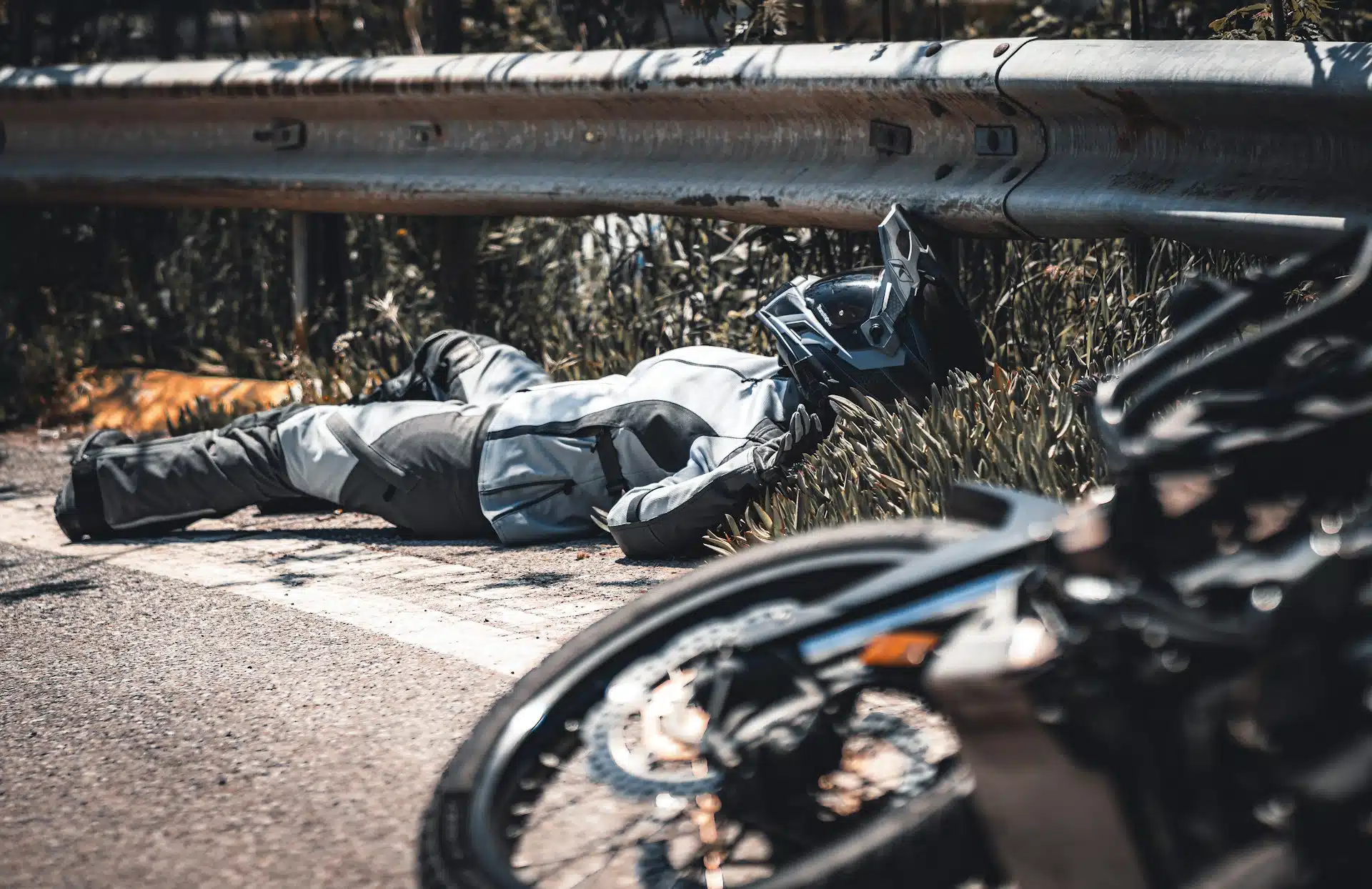
Photo by Mehmet Talha Onuk on Unsplash.
Illustrative stock photograph. Not an image of the accident or individuals described in this article.
Understanding What Our Client Would Need…for the Rest of His Life
To understand the full extent of our client’s injuries, we flew with him to Denver, Colorado, where he was examined by an orthopedic trauma surgeon and a specialist in rehabilitation and pain management.
Together, these physicians evaluated not just his current condition, but what living with an amputation would mean for decades to come. They identified the likelihood of additional surgeries, replacement prostheses every few years, and ongoing treatment to manage pain and other complications.
Their findings became the foundation for a detailed life care plan, developed with a rehabilitation specialist to identify and estimate the cost of our client’s future medical needs. We also brought in an economist to calculate lost earning capacity and projected care expenses, along with a litigation video specialist to document the everyday challenges our client now faces..
This work allowed us to do something we couldn’t have done early in the case: Establish, with medical evidence and expert analysis, what our client would likely need for the rest of his life—and what it would take to provide for those needs.
What Would a Southern Illinois Jury Think?
The case was filed in federal court in Southern Illinois, a region often considered conservative when it comes to personal injury verdicts. But, rather than assume how a jury might respond, we decided to find out.
We conducted a focus group with participants selected to resemble potential jurors from the area. A neutral moderator presented the evidence, including arguments the trucking company’s attorneys might raise, and asked participants to evaluate the case.
The results were revealing.
Every participant found our client credible. The group generally considered his medical expenses and projected future care costs reasonable. Several participants also reacted strongly to the suggestion that he could simply find another job despite his injuries.
The participants’ discussions suggested that a jury could place substantial value on the lifelong consequences of the crash.
Of course, a focus group cannot predict what an actual jury will decide. But it gave us valuable information about how people might view the evidence and what they considered fair compensation.
That helped us enter settlement negotiations with a stronger understanding of the case’s potential value.
A Settlement That Helps Protect His Future
By the time we entered mediation, the trucking company knew exactly what evidence we were prepared to present to a jury. Our investigation was complete, our experts had documented their findings, and we had a trial date on the calendar. We were prepared to let a jury decide if a fair settlement couldn’t be reached.
The case was ultimately resolved through a substantial settlement before its scheduled trial.
Our client deserves tremendous credit for how he has handled his recovery. He learned to walk using a prosthetic leg and returned to work despite the challenges he continues to face.
But returning to work doesn’t mean returning to the life he had before the accident. Walking on uneven ground, climbing stairs, managing pain, and caring for his prosthetic leg are now part of his daily routine. His future will also likely include additional surgeries and medical treatment.
No settlement can give him back what he lost. What it can do is help provide the resources he needs to manage those challenges and protect his future.
For us, this case illustrates why preparation matters. When someone’s injuries will affect them for decades, understanding their losses takes time, experienced professionals, and a willingness to take the case to trial when necessary.
Injured in a Truck or Motorcycle Accident? We Can Help.
If you or someone you love has been seriously injured in a trucking or motorcycle accident, you may be facing challenges that extend far beyond your immediate medical bills.
At Hipskind & McAninch, we take the time to understand how an injury affects your life, your work, and your future. We can help you evaluate your options and pursue fair compensation.
Contact us for a free consultation. We serve injured clients from our offices in Belleville and Highland, Illinois, and St. Louis, Missouri.
Past results do not guarantee a similar outcome. Every case is different and must be evaluated on its own facts.
Category:
Motorcycle Accidents, News, Personal Injury, Truck Accidents
Tags:
motorcycle accident, personal injury compensation, truck accident